
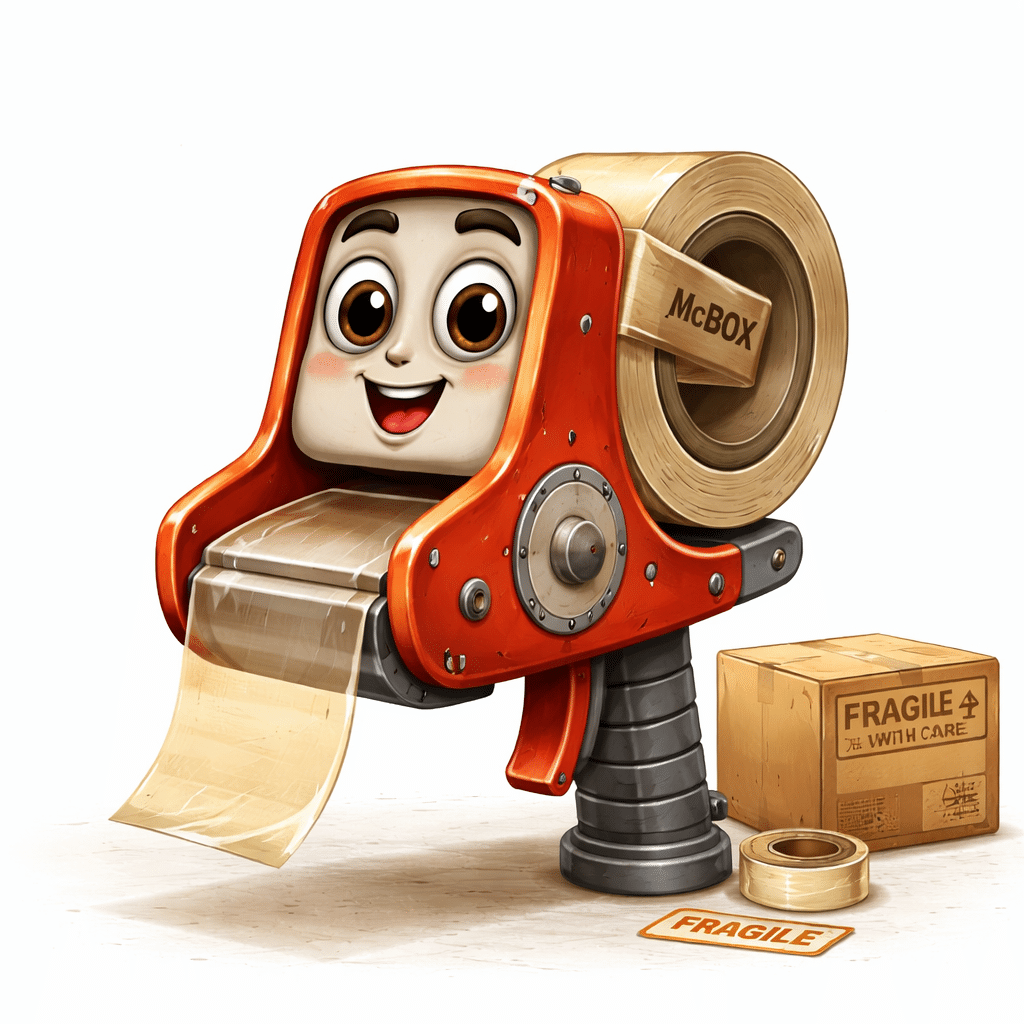
By Scotty McBox — 4,200+ moves packed, 85 km of tape dispensed, 0 breakages on my watch, 7 years of experience
Well packed, safely delivered!
In 4,200 moves and seven years of professional packing, I have never — not once — had a breakage on a box I personally supervised. Zero. That's not luck. That's technique.
The difference between a dish that arrives intact and one that arrives in pieces almost always comes down to five minutes of preparation. The right material, the right wrapping method, the right placement in the box. That's it. No magic. Just method.
I've packed 200 rare vinyl records without a scratch. I've packed 3,000 miniature figurines without losing a single one. I've packed grandmother's irreplaceable china set, a $12,000 television, and a lamp shaped like a flamingo. Every single item arrived exactly as it left.
This guide is everything I know about packing fragile items, organized by object type. Follow these techniques and your belongings will survive any move — whether Rusty Allen is driving them across Montreal or Le Grand Peate is hauling them coast to coast.
"The cost of proper packing materials is nothing compared to the cost of replacing broken items."
The Golden Rules (Before You Pack Anything)
Before we get into specific objects, these five rules apply to everything fragile. Break these rules and no amount of bubble wrap will save you.
Rule 1: Heavy in small boxes, light in large boxes. A large box full of dishes will be too heavy to carry safely, and the bottom will give out.
Rule 2: Fill every void. A box that rattles is a box that breaks. If there's empty space, items shift during transport. Shifting causes impact. Impact causes damage.
Rule 3: Reinforce the bottom. A minimum of three strips of packing tape across the bottom seam, plus one strip on each side seam. Use quality packing tape — not masking tape, not duct tape, and absolutely not electrical tape.
Rule 4: Wrap individually, never together. Every fragile item gets its own wrapping. Never let two unwrapped items touch each other inside a box.
Rule 5: Label on the side, not the top. When boxes are stacked, you can't see the top. Label the side with contents, destination room, and fragility level.
How to Pack Dishes and Flatware
Dishes break more often than anything else during a move. Usually because people stack them flat, which puts all the pressure on the bottom plate. That's wrong.
Step 1: Use a small or medium box. Reinforce the bottom. Line it with 3-4 inches of crumpled packing paper.
Step 2: Wrap each plate individually. Place 2-3 sheets of packing paper on your surface. Place the plate in the corner. Fold one corner over, fold the sides in, then roll.
Step 3: Stand plates on edge — vertically, like records in a crate. Never flat. Vertical positioning distributes impact evenly instead of concentrating force on one point.
Step 4: Fill the voids. Pack crumpled paper between each plate and fill all remaining gaps. The box should feel solid when closed.
Step 5: Label clearly. "FRAGILE — Kitchen — Plates — This Side Up"
Watch the full technique: How to Pack Dishes (GCVL Video)
How to Pack Glassware, Cups, and Stemware
Glasses are more fragile than plates because of their thin walls and stress points where the bowl meets the stem.
Regular glasses and cups: Stuff the inside with crumpled packing paper first — this prevents the glass from collapsing inward. Wrap the outside with 2-3 sheets. Place upside down in the box (rim down, base up). Use divider inserts if you have them.
Stemware (wine glasses, champagne flutes): The stem is the weakest point. Wrap the stem and base first. Stuff the bowl. Then wrap the entire glass in 3-4 sheets. Each piece should be a paper ball by the time you're done. Stand them upright, rim up.
Pottery and ceramics: Treat like glasses but with extra padding. Wrap handles separately before wrapping the full piece.
Watch the full technique: How to Pack Glassware & Pottery (GCVL Video)
How to Pack Artwork, Mirrors, and Framed Pictures
Flat fragile items have a different enemy: not impact, but flexion. A mirror can survive a bump but will crack if the box flexes during transport.
- Apply an X of painter's tape across the glass surface — if the glass breaks, the tape holds the shards together
- Wrap corner protectors on all four corners
- Wrap the entire piece in bubble wrap, bubbles facing inward
- Place inside a flat picture box or mirror box
- Fill all remaining space so the piece cannot move
For canvas paintings: Do not use bubble wrap directly on the surface — it can leave impressions. Wrap in glassine paper or acid-free tissue first.
Watch the full technique: How to Pack Artwork (GCVL Video)
How to Pack Electronics
Electronics are sensitive to three things: impact, static electricity, and moisture. Protecting against all three requires a methodical approach.
TVs, Monitors, and Screens
The original box is always best. If you still have it, use it. If not:
- Clean the screen gently
- Place a soft cloth or foam sheet over the screen surface
- Wrap the entire unit in bubble wrap (minimum two layers)
- Place in a TV-specific box or build a sandwich with two flat cardboard pieces
- Fill all voids — the screen should not shift at all
Never lay a flat-screen TV flat in the truck. Always transport it vertically, like it hangs on the wall.
Watch the full technique: How to Pack Electronics (GCVL Video)
Computers, Laptops, and Peripherals
- Back up all your data before the move
- Photograph the cable setup before disconnecting anything
- Label every cable with masking tape and a marker
- Wrap components individually in anti-static bags or bubble wrap
- Place in a box with minimum 2 inches of foam padding on all sides
- Hard drives and laptops should travel in your car, not on the truck
Watch the full technique: How to Pack Computer Equipment (GCVL Video)
How to Pack Kitchen Appliances
Small kitchen appliances are deceptively tricky. They're oddly shaped, have removable parts, and are heavier than they look.
- Clean and dry every appliance before packing (trapped moisture causes mold)
- Remove all detachable parts (blades, bowls, trays, cords) and wrap them separately
- Wrap the appliance body in bubble wrap or packing paper
- Place in a box and surround it with the wrapped parts
- Fill all remaining space — nest with pots and pans to save room
For pots and pans: Nest them inside each other with a sheet of packing paper between each one. Three pots can stack together. Place the stack upside down in a medium box.
Watch the full technique: How to Pack Kitchen Appliances (GCVL Video)
How to Pack Lamps
Lamps are awkward. Tall, top-heavy, fragile shades, breakable bases. They need to be disassembled.
- Remove the shade, bulb, and harp (the wire frame holding the shade)
- The shade: Wrap in tissue paper or packing paper. Place in its own box lined with crumpled paper. Never use newspaper (ink transfers) or bubble wrap directly on fabric (leaves marks).
- The base: Wrap in bubble wrap. If ceramic or glass, double wrap with extra corner protection.
- The bulb: Wrap individually in paper and pack in a small box.
- Place the cord in a zip-lock bag and tape it to the base.
Watch the full technique: How to Pack Lamps (GCVL Video)
The Packing Materials You Need
| Material | Use For | Do NOT Use For |
|---|---|---|
| Packing paper | Wrapping dishes, glasses, filling voids | Lampshades (use tissue paper instead) |
| Bubble wrap | Electronics, fragile items, extra cushioning | Direct contact with canvas paintings or fabric shades |
| Foam sheets | Screen protection, anti-scratch layers | Primary cushioning (too thin alone) |
| Anti-static bags | Computer components, hard drives | General packing (unnecessary and expensive) |
| Packing tape | Sealing and reinforcing boxes | Nothing else — the ONLY tape for boxes |
| Stretch wrap | Keeping drawers closed, bundling items | Protecting fragile items (it holds, it doesn't cushion) |
| Cardboard dividers | Separating glasses, bottles, stemware | Heavy items (dividers crush under weight) |
For the complete professional packing materials guide, see the GCVL written packing guide on our Resources page.
Common Mistakes (and How I Fix Them)
| Mistake | Why It Breaks Things | The Fix |
|---|---|---|
| Stacking plates flat | All weight on the bottom plate | Stand plates on edge, vertically |
| Using newspaper | Ink transfers to dishes and fabrics | Use clean newsprint packing paper |
| Not filling voids | Items shift and collide in transport | Fill every gap with crumpled paper |
| Box too large for heavy items | Bottom gives out, too heavy to carry | Heavy items in small boxes only |
| Wrapping two items together | They rub and scratch each other | Every item gets its own wrap |
| Taping only the center seam | Box opens under weight | Three strips across + side seams |
| Skipping the label | Movers don't know it's fragile | Label every side: FRAGILE + contents + room |
How Packing Connects to the Rest of Your Move
Before packing, declutter. Tria Serene helps clients let go of what they don't need. The less you have to pack, the fewer boxes I need to seal. Read her guide: How to Declutter Before a Move.
Know how many boxes you need. I wrote the complete guide: How Many Boxes Do I Need for Moving?
Follow the full timeline. Rusty Allen built the complete step-by-step guide: The Complete Moving Checklist.
If you need storage, Sheldon Storage has a guide on preparing your belongings: How to Prepare Belongings for Storage.
Take care of yourself while packing. Chef Andre Vaillant reminds us that packing is physical work. Lift with your legs. Take breaks. Stay hydrated. Read: Preparing Your Body for Moving Day.
The Bottom Line
Every broken item I've ever seen during a move was preventable. Every single one. The wrapping was wrong, the box was wrong, the void wasn't filled, or the label wasn't there.
Packing fragile items isn't complicated. It's just precise. Five extra minutes per box. The right materials. The right technique. The right attention.
After 4,200 moves and 85 kilometres of tape, I can tell you: the people who take packing seriously are the people who unpack smiling.
Take the time. Do it right. Your grandmother's china will thank you.
Heavy in small boxes, light in large boxes!
Call us: 514-266-1239
Frequently Asked Questions — Packing Fragile Items
How do I pack dishes so they don't break during a move?
Pack dishes vertically — never flat — in a small or medium box lined with crumpled packing paper. Wrap each dish individually in 2–3 sheets of packing paper and add a layer between every 3–4 dishes. Fill all empty spaces with crumpled paper to prevent shifting. Label the box "FRAGILE — THIS SIDE UP" on all four sides. Heavy in small boxes, light in large boxes — always.
Should I use newspaper or packing paper for fragile items?
Always use unprinted packing paper over newspaper. Newspaper ink transfers onto dishes, glasses, and decorative items — it's very difficult to remove and can permanently stain porous materials like ceramics. Packing paper is inexpensive (under $20 for a large bundle), acid-free, and leaves no residue. For extra-delicate items, layer bubble wrap on top of packing paper.
How do I pack wine glasses and stemware for moving?
Stuff the inside of each glass with crumpled packing paper first — this protects the stem. Then wrap the outside with 3–4 sheets of packing paper, rolling from a corner. Pack glasses upside down in a cell divider box (specifically designed for glassware). Never stack glasses directly on top of each other. A box of 6–8 glasses is the maximum safe weight for stemware boxes.
How do I pack a large mirror or framed artwork for moving?
Apply painter's tape in an X pattern across the glass surface — this holds glass fragments together if it cracks. Wrap the entire piece in several layers of bubble wrap secured with packing tape. Use mirror boxes (telescoping boxes designed for flat items) available at moving supply stores. Store vertically in the truck, never flat — a mirror transported flat is far more likely to break under the weight of other items.
How do I pack a flat-screen TV for moving?
The original box is always best. If you don't have it, use a flat-screen TV box (available at moving supply stores or large electronics retailers). Wrap the screen with anti-static bubble wrap — never regular plastic wrap, which can scratch. Do not lay the TV flat during transport; keep it upright. Remove the stand and pack it separately.
What is the maximum weight for a box of fragile items?
Keep fragile item boxes under 30 lbs (14 kg). Heavier boxes are harder to handle carefully and more likely to be dropped. For dishes and ceramics, aim for 15–20 lbs per box — this forces you to use more boxes but dramatically reduces the risk of breakage. Professional packers like Scotty McBox operate by a simple rule: if a box is hard to lift with one hand, it's too heavy for fragile items.
Scotty McBox — Rusty's Chronicle
Since 2018 - 4,200+ moves packed - 85 km of tape - 0 breakages
"Well packed, safely delivered!"